Building on Rented Land: Why Social Media is Failing Small Businesses (And What to Do About It)
Mar 2, 2026
If you run a small business in 2026, you probably have a love-hate relationship with social media.
You spend hours filming a behind-the-scenes video, carefully picking the trending audio, and writing the perfect caption. You hit "post" feeling proud of your work.
And then... crickets. The algorithm decided not to show it to anyone today.
Or worse, you hear the horror stories. A fellow local business owner wakes up to find their account has been suspended by an automated bot, wiping out 5,000 followers and their primary source of income overnight.
For a long time, the advice given to small businesses was simple: "You have to be on social media." And while that is still true for marketing, relying on social media as your only digital presence is one of the biggest risks you can take.
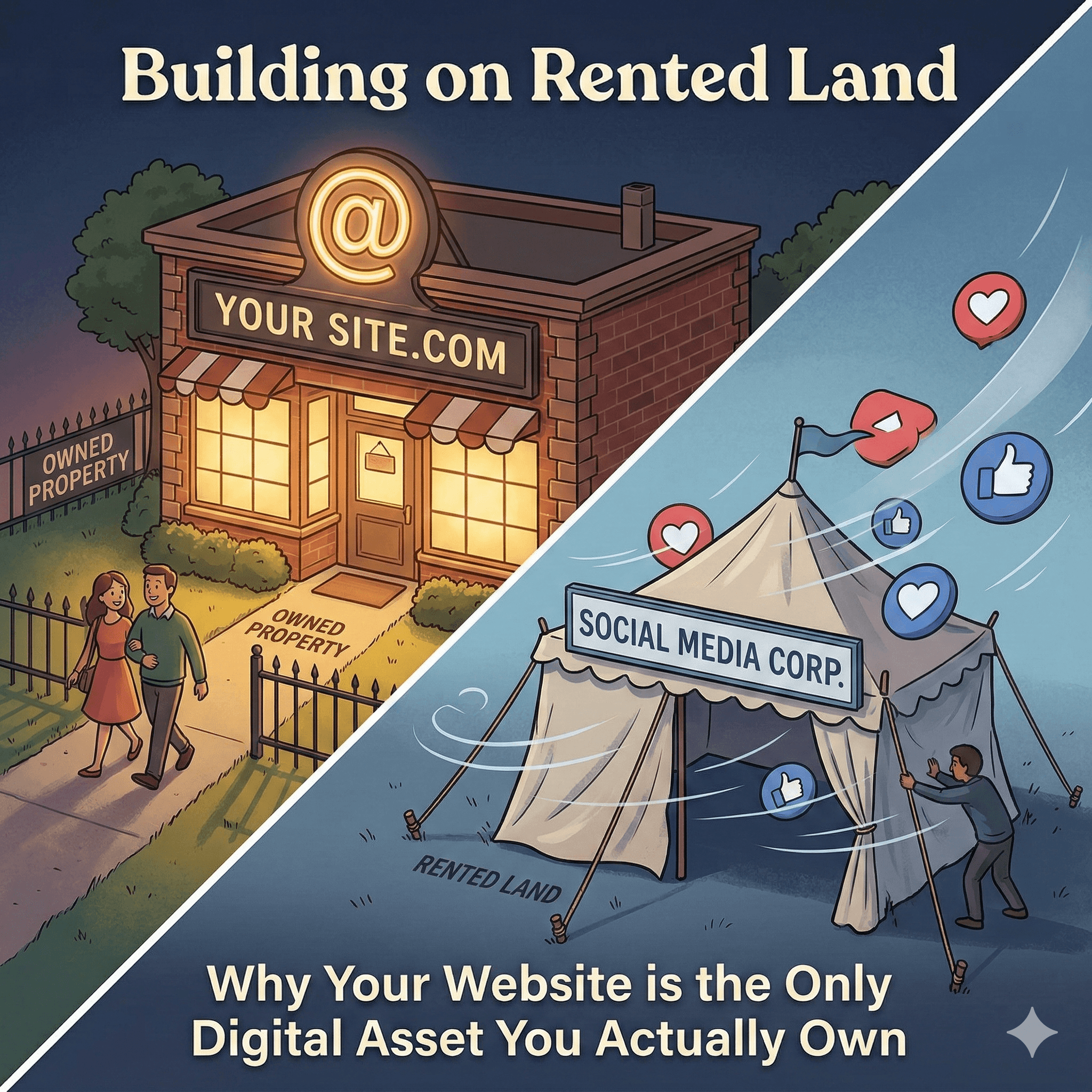
Here is why you need to stop building your business on rented land, and start investing in property you actually own.
The "Rented Land" Trap
When you build your business entirely on platforms like Instagram, Facebook, or LinkedIn, you don't actually own your audience. The platform does.
You are effectively a tenant. And the landlord (the algorithm) can change the rules, hike the rent (making you pay for ads to reach your own followers), or evict you without warning.
The Reach Problem: Ten years ago, if you had 1,000 followers, a post would reach 1,000 people. Today, organic reach is a fraction of that. Platforms want you to pay to play.
The Distraction Factor: Social media is designed to keep people scrolling. You might get a potential customer to look at your post, but right beneath it is a funny cat video, and right above it is an ad for your competitor. You don't control the environment.
The Lack of Professionalism: An Instagram page is great for showing your personality, but it is terrible for organizing information. A customer can't easily find your pricing, your booking calendar, or your FAQs in a grid of photos.
Your Website is Your Digital Castle
If social media is a billboard on a busy highway, your website is your brick-and-mortar storefront. It is the only piece of digital real estate where you make the rules.
When you shift your mindset to view your website as the permanent hub of your business, everything changes.
1. You Control the Journey When a customer lands on your website, there are no competitor ads. There are no distracting notifications. You control exactly what they see, in what order, and what action they take next. You guide them from "curious" to "customer" without interference.
2. You Build an Asset You Own A well-designed website with strong SEO (Search Engine Optimization) builds equity over time. The longer it exists and the more helpful content you add to it, the more Google rewards you with free, high-intent traffic. Unlike a social media post that disappears into the feed after 24 hours, an optimized website page works for you for years.
3. The Ultimate Backup Plan: The Email List The smartest small businesses use social media for one primary goal: getting people off social media and onto their website to capture their email address. If an algorithm changes tomorrow, or an app gets banned, an email list ensures you still have a direct, unfiltered line of communication to your customers.
The Winning Formula
This doesn't mean you should delete your social media accounts. They are incredible tools for brand awareness and community building.
But the strategy needs to shift.
Stop viewing a "Like" or a "Follow" as the end goal. Social media is the handshake; your website is the meeting room where the deal actually gets done.
Use your platforms to show your craft, share your personality, and catch people's attention. But always, always point them back to the digital home that you own.
In a digital landscape that is constantly shifting, your website is your anchor. Invest in it, build it on a solid foundation, and take back control of your business.